
Instituto Jurídico Portucalense
Instituto Jurídico Portucalense
II Latin Polar Science
Workshop
Drawing the Polar Futures in partnership with Portucalense Legal Institute
April 16, 2026 | Portucalense University
Porto, Portugal | Hybrid Event
Porto, Portugal | Hybrid Event
About
The polar regions, the Arctic and Antarctic, play a vital role in maintaining the stability of the Earth´s climate system. However, the effects of changes in these polar areas reach well beyond their boundaries, impacting global weather patterns, contributing to sea-level rise, and altering ecosystem dynamics. Latin America and Southern Europe, despite their geographical distance from the Arctic and Antarctic, are significantly influenced by these changes and occupy a crucial position in polar science, especially through nations that have Antarctic programs and emerging research groups throughout the region.
In spite of the increasing involvement, collaboration among Latin polar researchers is still limited, and early-career scientists frequently find themselves without structured opportunities for training, networking, and engaging in policy discussions. The Latin Polar Science Workshop is designed to fill these gaps by creating a collaborative platform for scientists, students, policymakers, and educators from Latin America and Southern Europe to exchange research, establish partnerships, and enhance the regions´ representation in global polar research conversations.
The goal of this kind of event expects to foster regional collaboration among institutions in Latin America and Southern Europe that are engaged in polar, ocean, and climate research; enhance the capacity of early-career researchers through scientific training, mentoring, and networking opportunities; promote interdisciplinary research that connects polar processes with the climate, oceanic, and socio-environmental systems of Latin America and Southern Europe; and strengthen connections with global networks.
Honour Committee
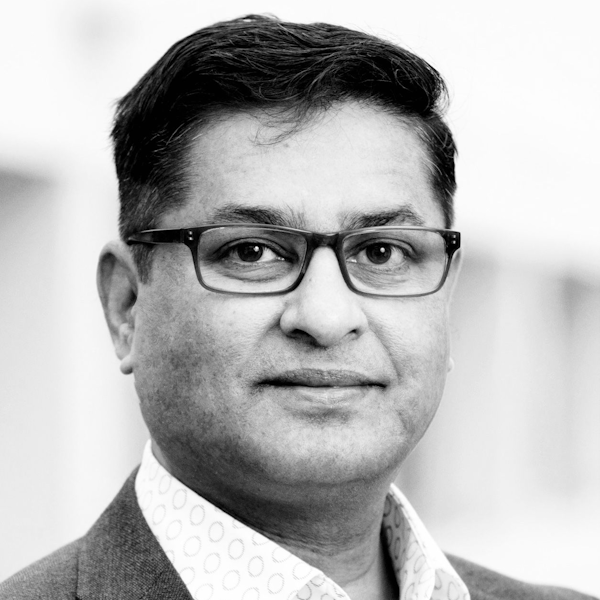
Kamrul Hossain
Kamrul Hossain is an expert in international law. He is a Research Professor and the Director of the Northern Institute for Environmental and Minority Law (NIEM) at the Arctic Centre of the University of Lapland. Currently, he chairs the University of the Arctic’s Legal Research and Education and leads the Thematic Network on Arctic Law. His research mainly focuses on international environmental law, ocean governance, and human rights laws, especially as they relate to the Polar and the Arctic regions. Over the years, he has published extensively on nearly all aspects of Arctic governance, including climate change and environmental management, biodiversity, Arctic geopolitics and security, the law of the sea, and human rights, emphasizing legal, institutional, and policy perspectives.
Kamrul Hossain
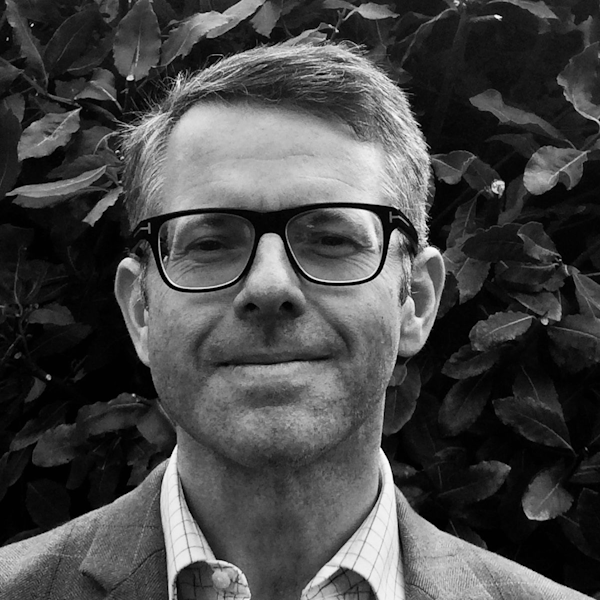
Klaus Dodds
Klaus Dodds took up his position as Interim Faculty Dean of Science and Technology in January 2026.
Prior to this role, he was Executive Dean of the School of Life Sciences and Environment at Royal Holloway University of London (2022-2025) and Professor of Geopolitics since 2005. He was also the University Lead for Environmental Sustainability.
He started his career at the University of Edinburgh before joining Royal Holloway in 1994. He researches and publishes in the field of geopolitics specialising in border disputes, polar and ocean governance and other areas including health geopolitics in the pandemic era.
In 2005 he was awarded the Philip Leverhulme Prize for Geography and in 2012 elected a Fellow of the Academy of Social Sciences. In 2017 he was awarded a Major Research Fellowship by the Leverhulme Trust. He is also a Fellow of the Royal Geographical Society, Regional Studies Association and Higher Education Academy.
Klaus was born in Middlesex, and his first years were spent in Ickenham. He completed his PhD at the University of Bristol in 1994 and has held visiting fellowships at St Cross College and St Johns College University of Oxford and been a visiting Professor at the College of Europe in Warsaw. In the last decade, he served as a specialist adviser to the UK Houses of Parliament, NATO’s Strategic Foresight Analysis, European Parliament, and a suite of commercial companies working in oil, gas, insurance and shipping.
He has published many books including Border Wars (Penguin 2022) and Unfrozen: The Fight for the Future of the Arctic (Yale University Press 2025). His next book will be on land grabbing and spheres of influence.
Klaus Dodds
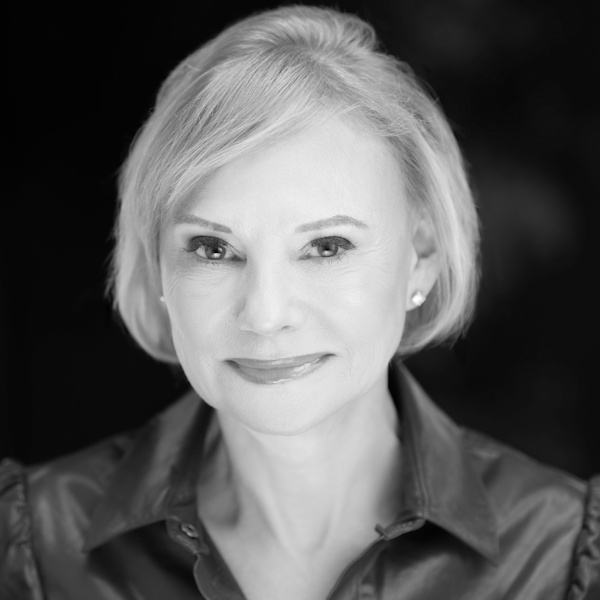
Sherry Goodman
Sherri Goodman is an independent board director; national security, energy and climate security leader, and former senior defense official. She is the author of Threat Multiplier: Climate, Military Leadership, and the Fight for Global Security (Island Press, 2024), the story of the US military’s experience on the front lines of a changing frontier for energy and climate resilience.
Sherri Goodman serves as the Secretary General of the International Military Council on Climate and Security, which represents more than 40 military and national security organizations addressing the security risks of a changing climate. She is a Distinguished Fellow at the Atlantic Council and a Senior Associate at the Harvard Arctic Initiative. She was a senior fellow at the Wilson Center’s Environmental Change and Security Program and Polar Institute. She is a frequent public speaker and is credited with educating a generation of US military and government officials about the nexus between climate change and national security, coining the term “threat multiplier,” and fundamentally reshaping the national discourse on the topic.
Goodman is the founding board chair of the Council on Strategic Risks and Advisory Board Member of the Center for Climate & Security. She serves on the boards of the Atlantic Council and the Woods Hole Oceanographic Institution. She is a life member of the Council on Foreign Relations, where she served as chair of the advisory board for the Council’s report on Governing Solar Geoengineering and on the Arctic Task Force. Goodman served as co-chair of the Commission on Nuclear Energy and American Leadership.
Goodman is the former president and CEO of the Consortium for Ocean Leadership. She served as senior vice president and general counsel of CNA from 2001 to 2014. She is the founder and executive director of the CNA Military Advisory Board, whose landmark reports include National Security and the Threat of Climate Change (2007) and Advanced Energy and US National Security (2017).
Goodman served as the first Deputy Undersecretary of Defense (Environmental Security) from 1993 to 2001, where she was responsible for environmental issues, energy, safety, and occupational health for the DOD. She established the first environmental, safety, and health performance metrics for the Department and led its energy, environmental, and natural resource conservation programs. Overseeing the President’s plan for revitalizing base closure communities, she ensured that 80 percent of base closure property became available for transfer and reuse. She led the Arctic Military Environmental Cooperation program, which developed a container for storage of spent nuclear fuel for liquid waste from Russian nuclear submarines.
Goodman served on the staff of the Senate Armed Services Committee, where she was responsible for oversight of the Department of Energy’s nuclear weapons complex, including research and development of nuclear materials and national labs as well as environmental cleanup and management. She has practiced law at Goodwin Procter as both a litigator and environmental attorney and has worked at RAND Corporation and SAIC.
She has received numerous honors and awards, including a Lifetime Achievement Award from the Environmental Peacebuilding Association in 2024, an honorary doctorate from Amherst College in 2018, the Department of Defense Distinguished Service Award in 1998 and 2001, the Gold Medal Award from the National Defense Industrial Organization in 1996, and the Environmental Protection Agency’s Climate Change Award in 2000.
Goodman is the author of The Neutron Bomb Controversy: A Case Study in Alliance Politics (Praeger, 1983) and has written dozens of reports and articles on a broad range of climate, energy, environmental, and national security matters. Hon. Goodman appears regularly on major news media and is an active public speaker at universities, research organizations, and corporations. She holds degrees from Harvard Law School, Harvard Kennedy School, and Amherst College.
Sherri Goodman
Call for Abstracts
Porto will host the II Latin Polar Science Workshop organised by Latin polar Science in partnership with Portucalense Legal Institute (Portucalense University) where the workshop will be held on 16th April, 2026. This second interdisciplinary edition will join experts, diplomats and researchers from different sciences to discuss the research in polar regions done in Latin countries such as: Portugal, Brazil, Spain and Italy.
The organizing committee of the Latin Polar Science Workshop invites professors, researchers and students (2nd year of Master and PhD candidates), to submit abstracts related to one of the following topics:
- Polar infrastructures
- Climate impact on the Cryosphere
- Polar science diplomacy
- Socioeconomic impacts of extreme climate events
- Polar BRICS+ Programs
- Connections between Polar and Space Programs
- Climate connections among Amazonia, Antarctic and Arctic
- Use of Cryosphere by Space Programs
- Antarctic
- Arts, humanities and literature
- Polar history
- Indigenous communities
- Arctic governance
- Maritime routes
- Security and defence
- Non-Arctic states´ role in Arctic cooperation
- Climate change data in Antarctica and Arctic
- Marine life
- Atlantic and Arctic Ocean
- AMOC
- other topics
Important Information
- Abstract submission deadline:
by February 28, 2026– extended until March 8, 2026 - Abstracts will be accepted in English only and will be published in the Book of Abstracts.
- Notification of acceptance: by March 10, 2026
- Registration deadline after abstract acceptance and for in‑person attendees: by March 22, 2026
- Registration deadline for online attendees: by April 10, 2026
- Workshop Presentation: April 16, 2026 (10 minutes)
- Fee Registration:
Presenters:
- 25 euros: students (Applicants registering as students must send ID student to event email address: latin.polar.science@upt.pt);
- 50 euros: professionals (professors, researchers…)
Note: The fee gives access to all sessions of the event. During registration, please indicate if you will participate online or in-person.
Co-authors can register as:
– Attendee – in person (with lunch) – 20€
– Attendee – in person (without lunch) – 15€
– Attendee – online – 10€
Keynote Speakers
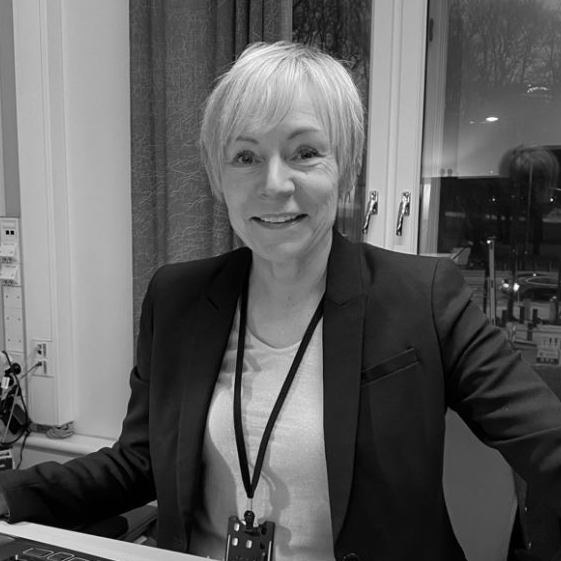
Hanne Brusletto
Ambassador of Norway to Portugal
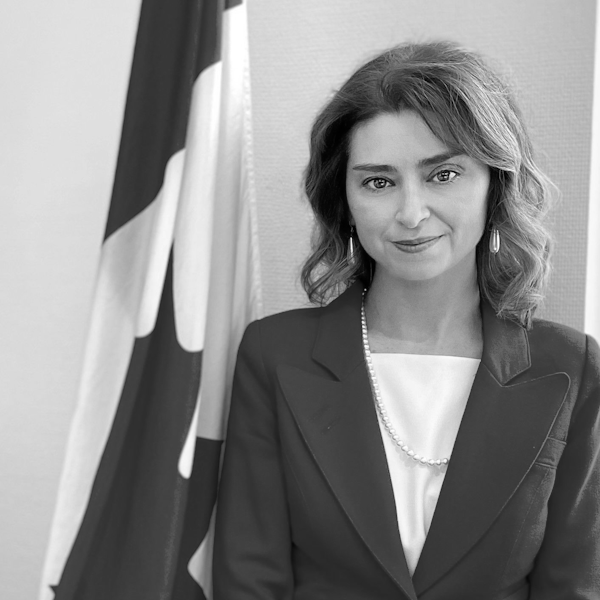
Élise Racicot
Ambassador of Canada to Portugal
Programme
Organising & Scientific Committee
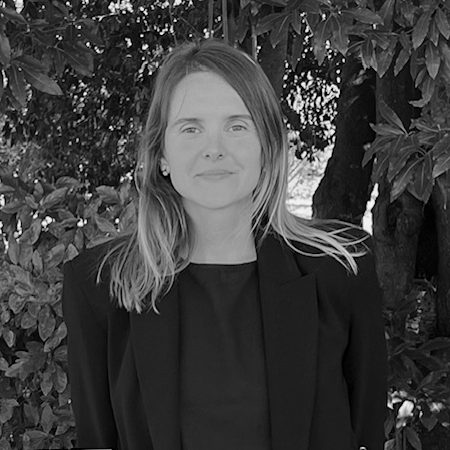
Ana Belén
Ana Belén López Tárraga, Research Group TEIDE (University of Salamanca, Spain). PhD in Social Sciences and Master’s in European Union Studies from the University of Salamanca. Graduate in Journalism from the University of Valencia. She has recently defended her dissertation on the Arctic territory and European policies. She has published several articles and book chapters on this topic. Her research focuses on public policies aimed at sparsely populated territories and actions designed to reverse depopulation trends. She is particularly interested in energy and food transitions as thematic areas, and in the Arctic and the Spanish-Portuguese border as geographical fields of study. Visiting Researcher in 2022 at the Arctic Centre, University of Lapland (Rovaniemi). During the 2023/2024 and 2024/2025 academic years, she has worked as an Adjunct Professor in the Department of Geography at the University of Salamanca, where she is currently a member of the research group Territory, Innovation and Development (TEIDE). Since 2021, she has been part of the technical team of the Duero-Douro EGTC, a European entity responsible for implementing various initiatives and projects to promote territorial development along the Spanish-Portuguese border.
Ana Belén López Tárraga
Ana Fávia
Ana Flávia Barros-Platiau is an International Relations professor at the University of Brasilia and Superior Defence College (ESD). She is the former director of the Brasilia Research Centre for Earth System Governance (2019-2024) and member of the ocean task force, based at Utrecht University. Her main research topics are ocean governance and polar diplomacy. Her secondary topics are complexity thinking, global governance, and the Anthropocene. She has published extensively on IR and international law, focusing on diplomacy and geopolitics. She is the first editor of the Coleção Antártica published by the Fundação Alexandre de Gusmão, Ministério das Relações Exteriores do Brasil (Biblioteca Digital da Fundação Alexandre de Gusmão). In 2023, she coedited the book Brazil in the Geopolitics of the Amazon and Antarctica (Lexington). In 2025 her team published the chapter “Diplomacy in the Anthropocene: the Climate and Cyber as Threat Multipliers” (Springer). She holds a masters’ and PhD degree in International Relations from the Université de Paris I (Panthéon-Sorbonne). ORCID: https://orcid.org/0000-0002-8804-0378. Brazilian CV: http://lattes.cnpq.br/7599253575479186.
Ana Flávia Barros-Platiau
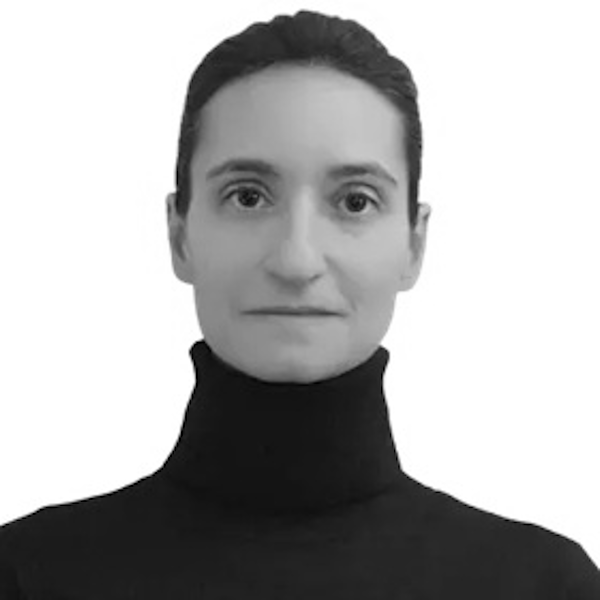
Celine Rodrigues
Céline Rodrigues holds a PhD in International Relations at Universidade Nova de Lisboa, Portugal, with a focus on the North Atlantic and Arctic basins demonstrating through scenarios the importance of the Arctic for Portugal. The previous research topic is on human security of Arctic Indigenous peoples with the thesis “Human security of Inuit and Sámi in Canada and Finland: comparing Arctic policies”. She participates in conferences (Paris Defence and Strategy Forum 2025, High North Dialogue, Arctic Circle Assembly, Centro Cultural de Macau, among others), publishes reflections (Janus, Expresso newspaper), articles (Cogitatio, The Polar Journal – Taylors and Francis, Current Development of Law) and policy brief (NAADSN, UNU-CRIS and Atlantic Centre). She is invited for lectures/open classes. Céline is a member of many institutions / organisations in Portugal and abroad related to the Arctic region. She spent three months in the Arctic at the Arctic Centre, University of Lapland, Rovaniemi, Finland, and is a Researcher at IPRI and CIDIUM, Researcher Fellow at NAADSN, and Fellow at Polar Research and Policy Initiative. Céline is also an Arctic and Governance policy Advisor at Global Choices. She organizes conferences (Latin Polar Science Workshop) and webinars as co-founder of Latin Polar Science (2025) and Grupo Latino de Ciências Polares (2024).
Céline Rodrigues
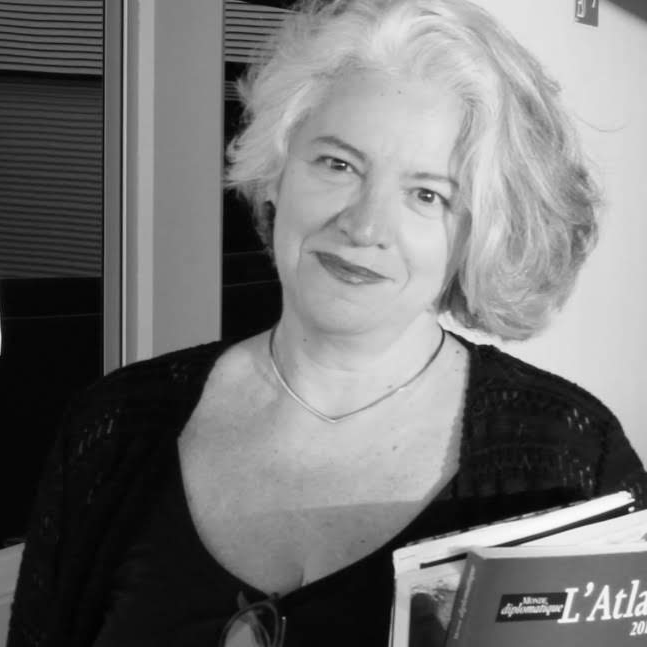
Laura Urrejola
Post Doc Researcher at the Institute of International Relations of the University of Brasília (IREL/UnB), with a focus on Polar, Space, and Oceanic Geopolitics, Geoeconomics and Scientific Diplomacy. Holds a Ph.D. and M.A. in International Relations from IREL/UnB, with research on China’s international insertion through strategic infrastructure in Antarctica, Patagonia, the Amazon, and the South American energy sector. Coordinator of the Working Group on Critical Infrastructure in the South Atlantic and Antarctica at GEPSI/IREL/UnB. Vice leader of Working Group “International System in Polar Anthropocene” in UnB by leadership of Professor Dr Ana Flávia Barros Platiau under the National Institute of Science and Technology (INCT) of the Cryosphere, linked to the National Council for Scientific and Technological Development (CNPq) of the Ministry of Science, Technology and Innovation of Brazil. Visiting researcher at the Ambrosio Gioja Institute (University of Buenos Aires), working on Antarctic and space-related topics. Completed specialization programs at UNDEF (Universidad de la Defensa – Argentina) and UNLP (Universidad de la Plata), focusing on strategic studies of China, South Atlantic region and Antarctica. Has 23 years of professional experience in environmental feasibility analysis of infrastructure projects, with emphasis on energy, mining, and space sectors. Holds a Bachelor’s degree in Geography from the University of São Paulo (USP) in the 1990´s.
Laura Urrejola
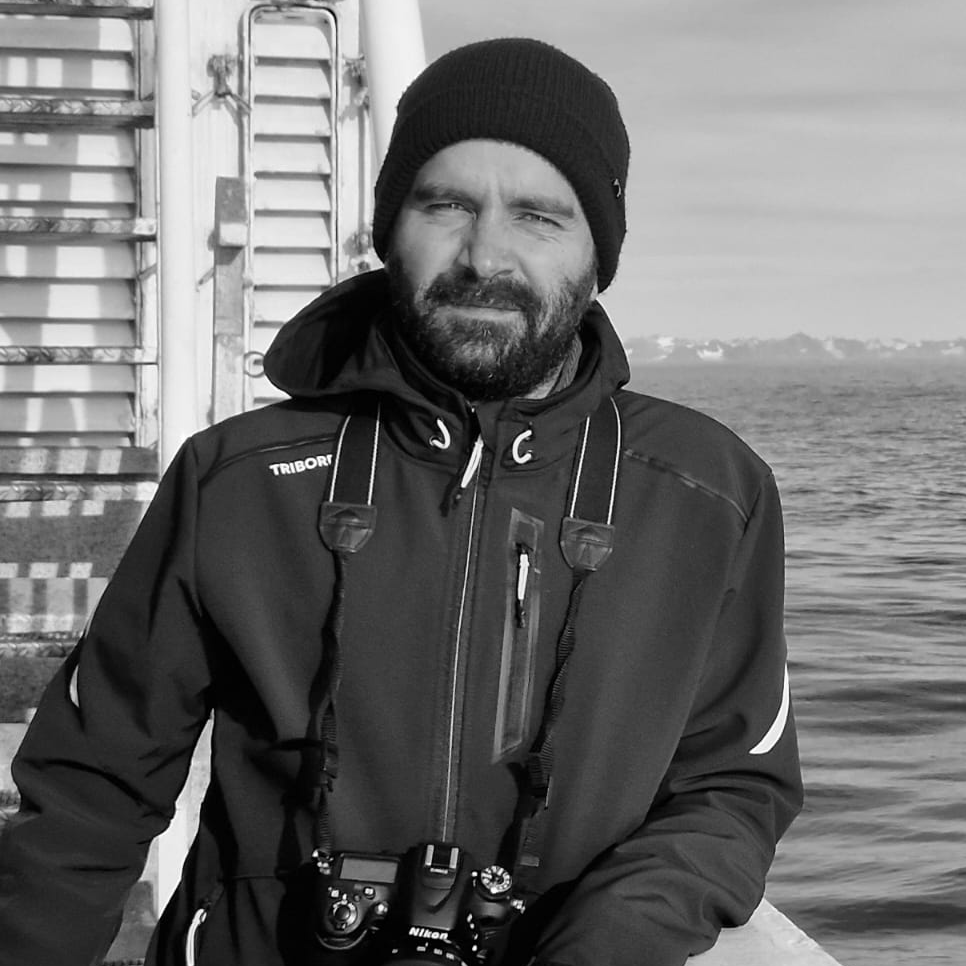
Marco Volpe
Marco Volpe is a doctoral candidate in the Faculty of Social Sciences at the University of Lapland and a visiting researcher at the Arctic Centre in Rovaniemi, working within the Arctic International Relations Team. His research focuses on China’s Polar Science Diplomacy, examining how scientific activity shapes policy, influence, and international cooperation in the polar regions.
He lectures on Arctic Geopolitics at both the University of Lapland and the University of Milan, serves as an editor for the Italian journal Il Polo, is a contributor to Osservatorio Artico, and is part of the organising team of the Inter-Polar Dialogue Conference, held biennially in Kathmandu, Nepal.
Over the past two years, Marco has conducted extensive fieldwork across the Arctic and East Asia, including research stays in China and South Korea. These experiences have allowed him to observe first-hand how scientific infrastructures, research stations, and international collaborations operate on the ground, enriching his analysis of China’s evolving role in polar governance.
His most recent publication, “China’s Arctic Policy: How Scientific Research Interplays with Arctic Governance,” in Arctic Policies of Non-Arctic States (2025) (eds. Dervovic, Kirchner, and Ulatowski), explores how China’s expanding scientific presence in the Arctic is gradually strengthening its role within evolving governance structures.
Marco Volpe
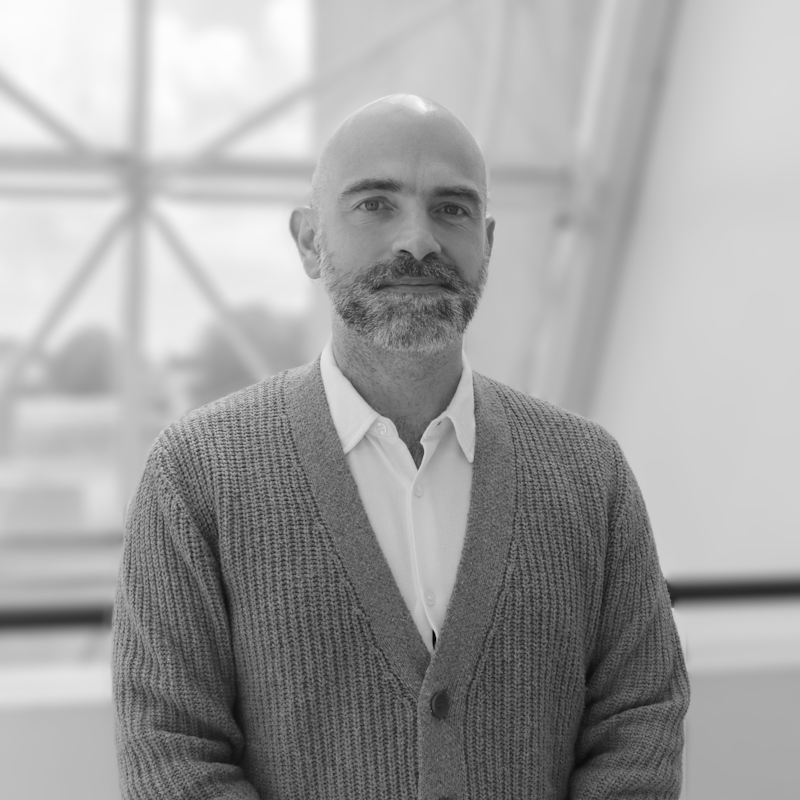
Pascoal Pereira
Pascoal Pereira is an Assistant Professor in International Relations at the Portucalense University and is a researcher at the Portucalense Legal Institute. He holds a PhD in International Politics and Conflict Resolution from the University of Coimbra. His research interests include the EU Foreign Policy (mainly the Enlargement Policy), national self-determination and theories of nationalism.
Pascoal Pereira
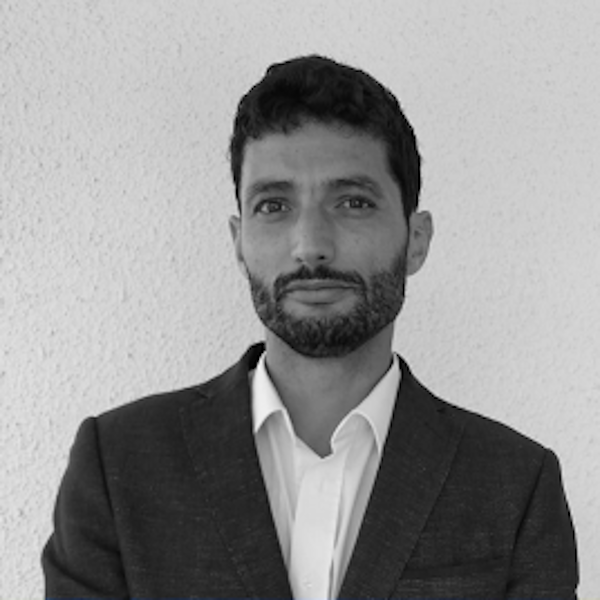
Rui Garrido
Rui Garrido holds a PhD in African Studies and is an assistant Professor at the Law Department of the Portucalense University. He is also a researcher at the Portucalense Legal Institute, where he coordinated the research group on International Politics and Governance. His research interests are related to International Law and International Relations, human Rights governance and international justice. He is an assistant editor of the Portucalense Law Journal for the International Politics area. He also collaborated with the National Defence Institute.
Rui Garrido
Partners




Location
Rua Dr. António Bernardino de Almeida, 541 • 4200-072 Porto, Portugal
latin.polar.science@upt.pt
ijp@upt.pt
Bus lines (STCP)
205, Campanhã | 300, Av. Aliados | 301, Sá da Bandeira | 803, Boavista | 603, Marquês
GPS Coordinates
41º 10´ 49.16" N 8º 36´ 18.17" W 41.1808325988456, -8.60562325257553
Metro Line
D - Hospital de S. João (Saida na estação do IPO)
Accomodation options
- Eurostars Oporto – R. Mte. Guilherme Camarinha 212, 4200-537 Porto
- Hotel Portinari – R. da Arroteia 68, 4200-095 Porto
- Hotel Porto Nobre – Rua do Amial 838, 4200-056 Porto
- Residencial Paranhos – R. Dionísio dos Santos Silva 199, 4200-020 Porto
- Hotel IBIS – Porto, S. João – Rua Dr. Plácido da Costa, 4200-450, Porto